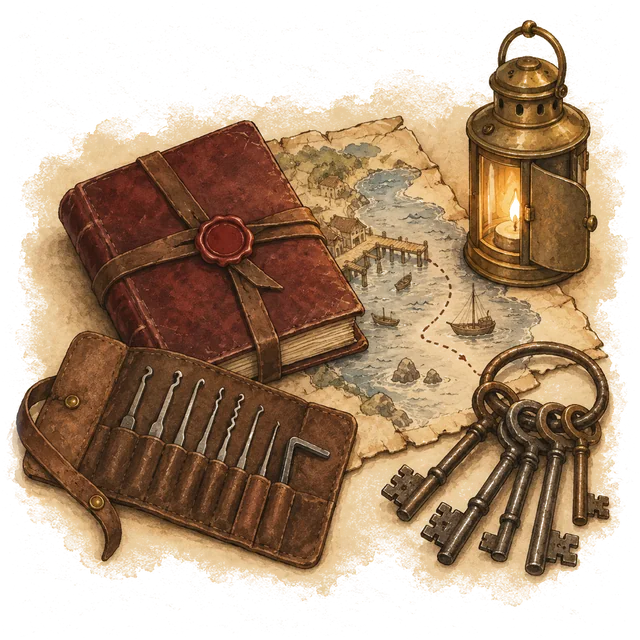
The heist
Get it out without being caught.
Something valuable sits somewhere well guarded. The team has to plan, pool what each of them knows, and change the plan when it breaks.
Tends to bring out Information Adaptation
 The Academy of DungeoneeringStory games for working teams
Team sessions · How it works
A session is one complete story, start to finish, in three hours, then a conversation about what it showed. This is everything that happens, in order.
The session
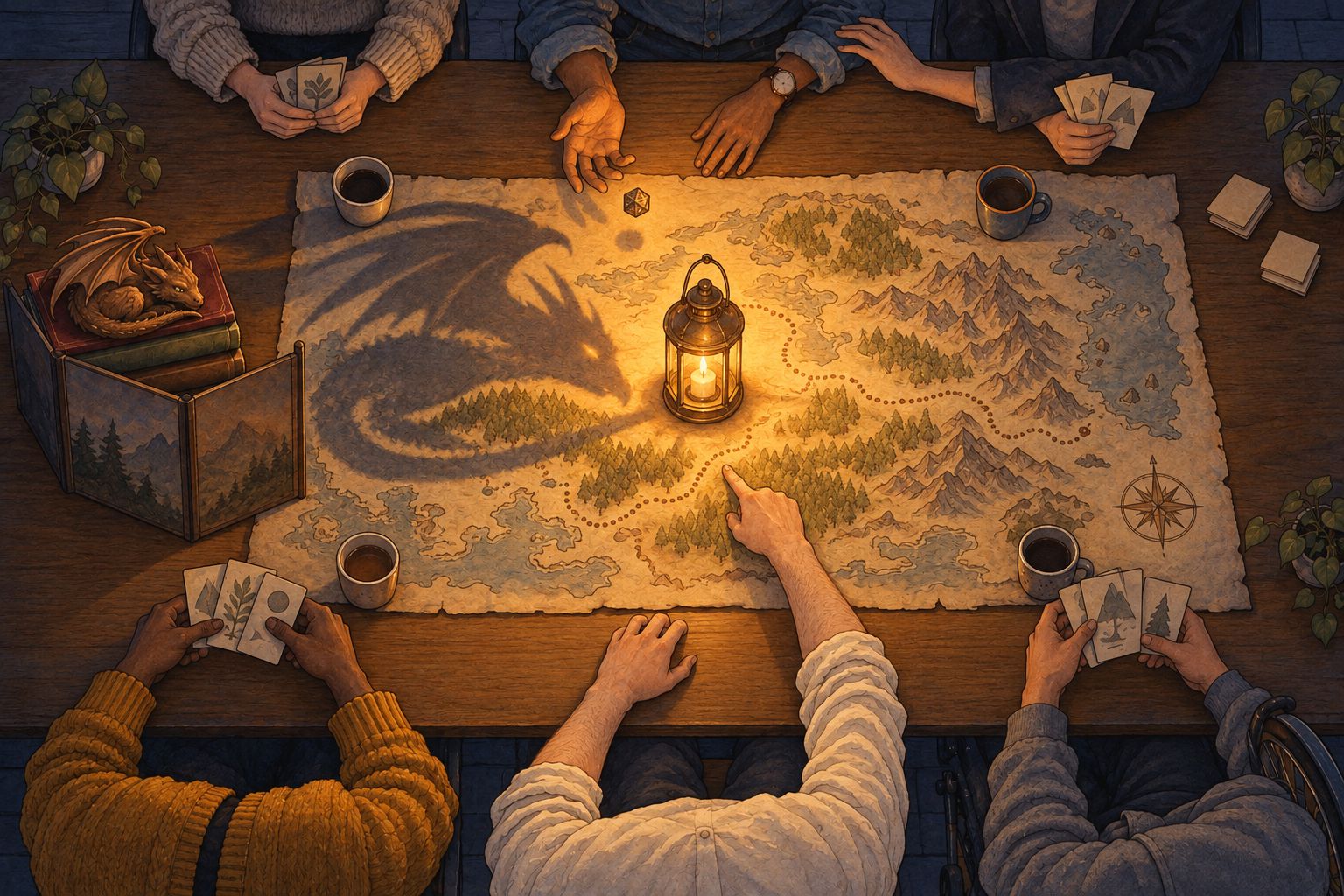
What does the team want from the session? Is there anything that should stay out of the story? Which quest and which world would suit you?
Each player picks a ready-made character from a one-page sheet and gets a set of dice to keep. The table agrees what stays out of the story. The game master explains that they'll be watching how the team works together, not how anyone performs.
Session Zero is what game masters call these first fifteen minutes. Playing online? Everyone's dice arrive in the post before the session.
The team faces one problem together, and every challenge needs more than one person to solve it. Players say what their character does. The game master handles the rules and the dice maths.
A chance to stretch before the conversation.
First reactions, one sentence each. A replay of the three moments that decided the story. Who did what: how the team made decisions, who led, and where it stuck. Then each person names one thing they'll do differently at work.
One page: the story, the moments that mattered, and the team's commitments in their own words. The team reads it first. See an example
Twenty minutes about what happened afterwards. What did the team try? What helped? What would make the session more useful?
Choose your quest
Every session is one complete story built around one problem. Pick the kind that suits what your team wants from the day, or tell us on the call and we'll suggest one.
The heist
Something valuable sits somewhere well guarded. The team has to plan, pool what each of them knows, and change the plan when it breaks.
Tends to bring out Information Adaptation
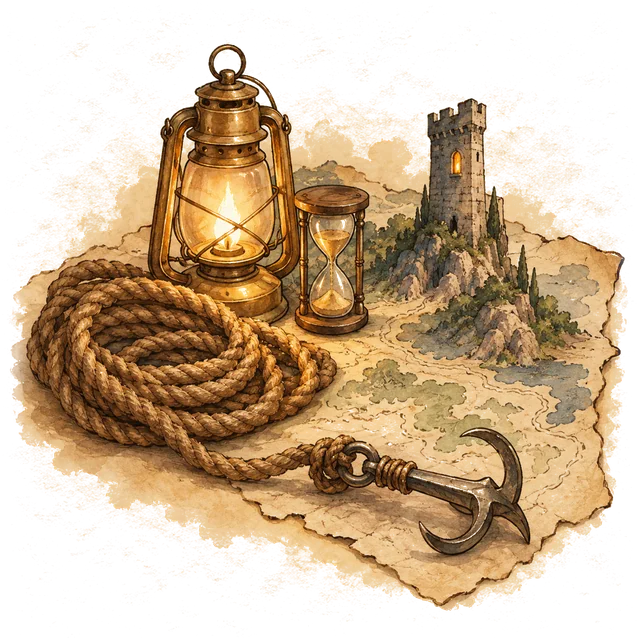
The rescue
Someone is trapped and the clock is running. The team has to agree what matters most, decide fast, and keep going when the first route closes.
Tends to bring out Decisions Adaptation
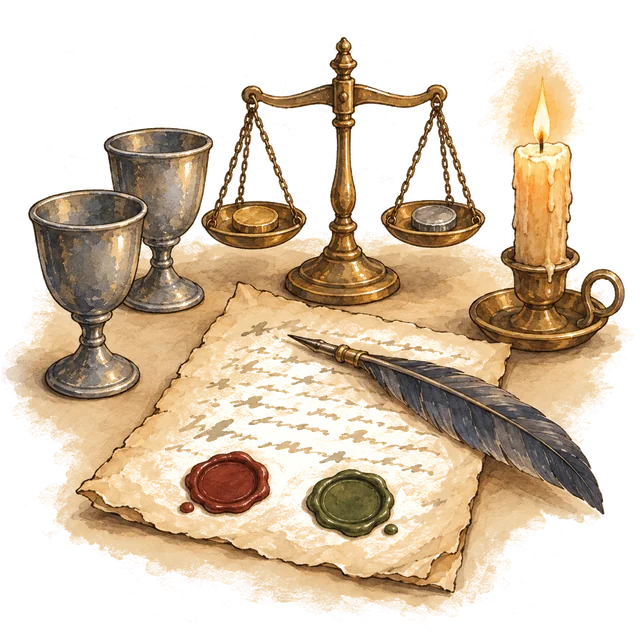
The negotiation
Two sides, one agreement, and no fighting your way out. Every voice counts, and disagreement has to go well inside the team as well as across the table.
Tends to bring out Voice Challenge
Nobody needs to know the story beforehand. Every quest starts and finishes in the one session.
Choose your world
Most quests work in most worlds: a heist on a space station, a rescue from a haunted manor, a negotiation with a dragon. Tell us what you'd like and we'll find a combination that works.
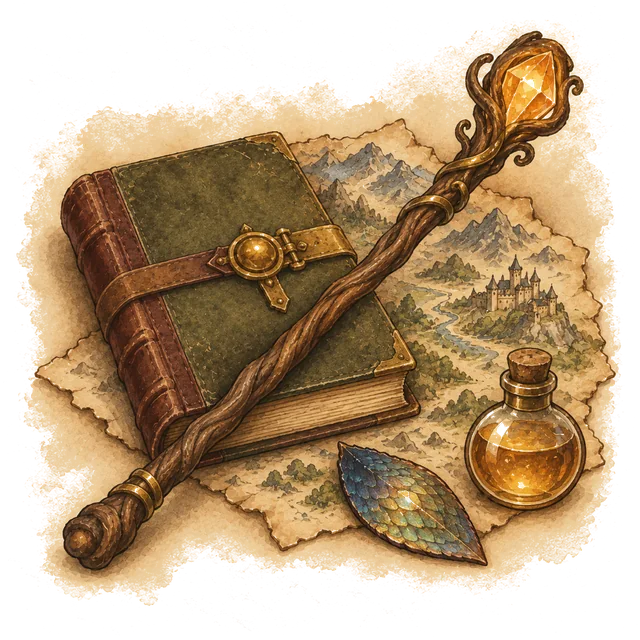
Fantasy
Castles, forests and old magic: the classic setting for a story like this.
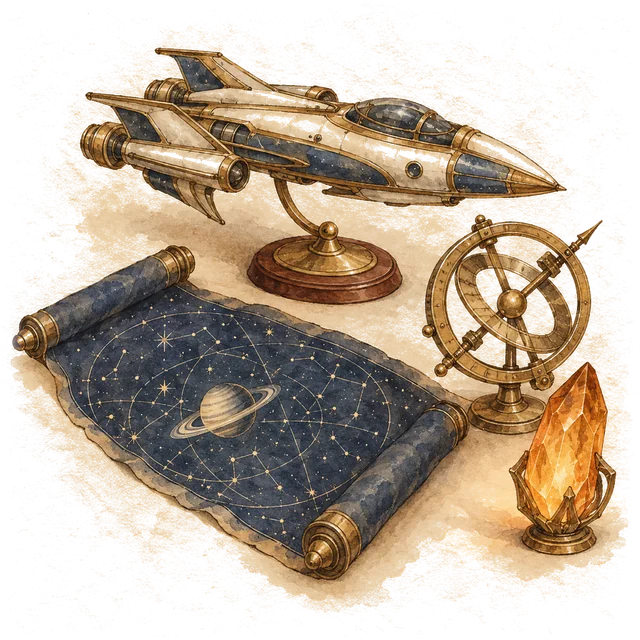
Science fiction
Starships, strange planets and machines that don't always do what they're told. The same teamwork, under different stars.
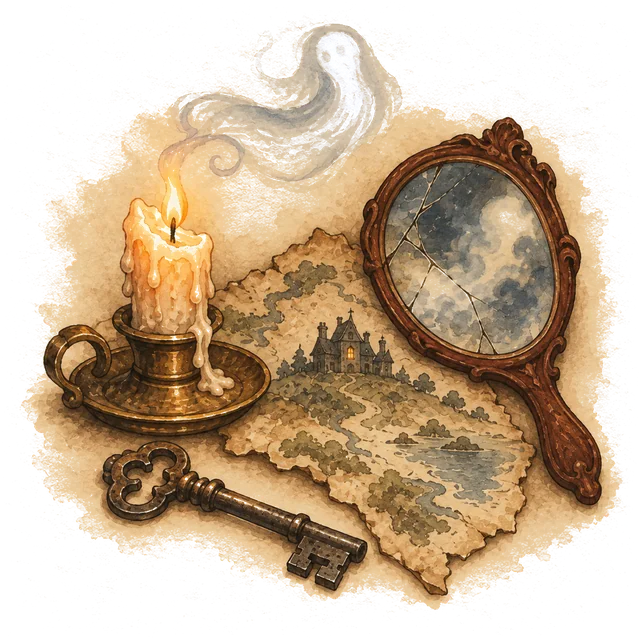
Horror
Creaking houses, guttering candles and the feeling that something is watching. Dread, not gore, and the table sets the limits in Session Zero.
Something else in mind? Ask, and we'll talk it through on the call. See the games we run
What the game master watches
During play the game master keeps notes on five things. Every one of them is about how the team works together. Nobody is assessed as an individual, and the team knows this before play starts.
What gets shared, and what stays in one person's pocket.
Who gets heard, and who hasn't spoken yet.
How choices get made, and how fast.
How disagreement goes, and whether doubts get said out loud.
How the team recovers when a plan fails.
Our promises
Before play starts, everyone knows what's being watched and how the write-up will be used.
The write-up describes the team, never named individuals, and the team reads it before whoever booked it.
A game shows how people played that game. The debrief tests whether it says anything about work, rather than assuming it does.
Nothing from a session is for hiring, promotion or performance decisions.
No photos, audio or video unless everyone at the table agrees first.
Book a table
Email us with your group size, two or three possible dates, and whether you'd like to play in person or online.
For in-person sessions, tell us the location and whether you have a venue or would like us to arrange one. Travel is included in Cambridge and London. Additional travel and venue costs are agreed before booking.
hello@academyofdungeoneering.com
Explore the games · Start a campaign
Need to convince someone first? Here's a note you can send